Trending

Every writer who sets a story near salt water eventually reaches for the same shelf: the myths. They are strange, useful and free. The trouble starts when a draft turns into a tour guide — three paragraphs of history, a glossary, and a plot that has quietly stopped moving. The twelve myths below are offered as tools rather than topics. Use one as a clock, one as a wound, one as a compass. Never all twelve on the same page.
The Dutchman is the most borrowed ship in fiction and the most often explained to death. The core is plain: a captain vows to round a cape against impossible weather, and the ship is condemned to keep trying. What frightens is not the storm. It is the repetition.
So use it as a clock, not a legend. Decide the terms of the curse and let them drive the plot: the ship can make landfall once every seven years; it must be met by someone who knows its name; it appears only to a watch that stays awake until dawn. Then give the story a witness — a harbourmaster's daughter who logs the sightings, a lookout on his first voyage — and the myth becomes a countdown rather than a paragraph of background. Let the rules surface through argument and half-belief. Never through a briefing.
Sailors said a man who died at sea went to Davy Jones's locker, and the phrase worked precisely because it refused to describe the place. The kraken, the many-armed terror of northern waters that filled the pages of early natural histories, works the opposite way: it is all description, and its power is scale.
Put the two together and you have a lesson in measure. Naming death with an idiom tells you who is afraid; a monster at the rail tells you how small the ship is. If you use the kraken, count something — barrels, yards of rope, minutes until the boats are swung out — so the reader feels the arithmetic of being outclassed. If you use Davy Jones, let the crew argue about whether the locker is a place or just a polite way of saying the sea keeps what it takes.
Three myths, one problem: someone crosses a border and someone pays for it. Mermaids appear in coastal traditions around the world. Selkies belong to the northern isles, where a seal sheds her skin, becomes a woman, and is bound to the man who hides it. Sirens are Greek, and their danger is not beauty but the listener's own desire — the song offers exactly what you already wanted.
When you borrow these, decide which side pays, and make the payment physical. The hidden sealskin is a passport locked in a cupboard; the story turns on consent, not enchantment. Keep one concrete detail — salt drying on the flagstones, seaweed in the bed, a wet footprint that never quite evaporates — and refuse to explain the rest. Mystery survives specificity. It dies in summary.
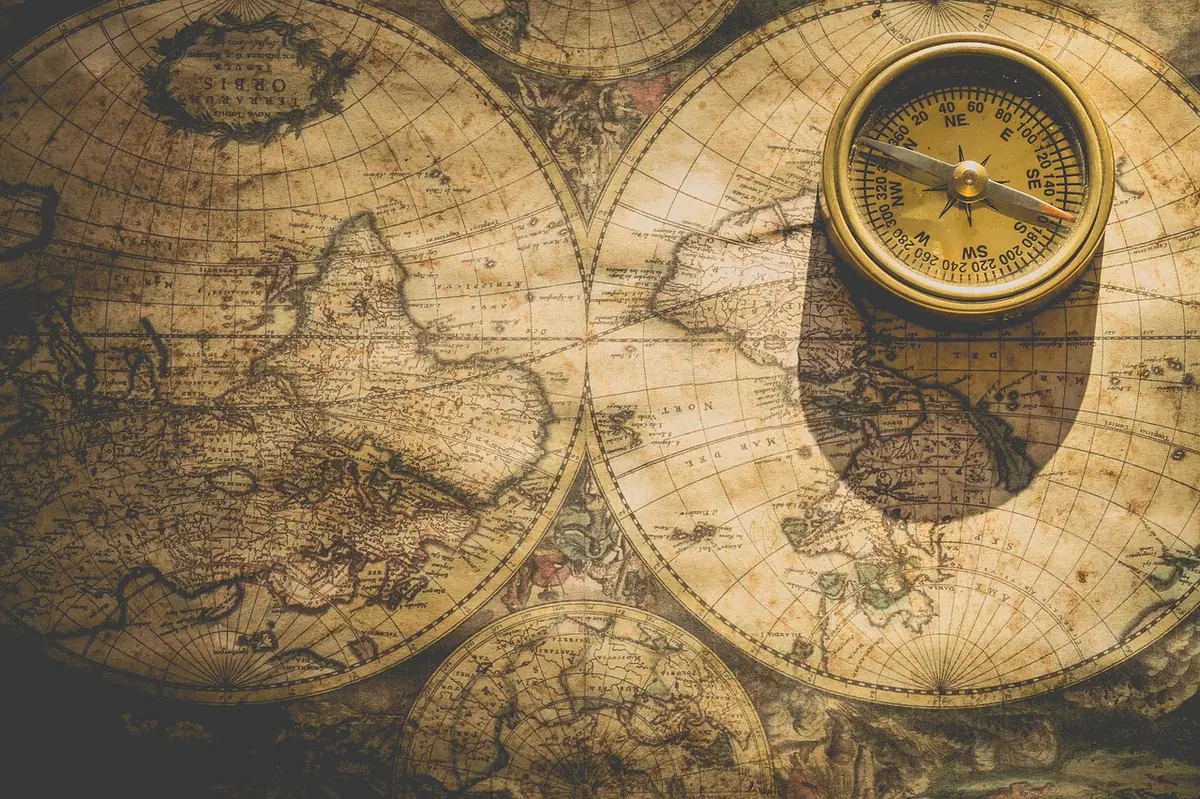
For centuries chart-makers printed islands no sailor could find: Hy-Brasil west of Ireland, Antillia, Frisland. A name on a map is a promise, and a promise that cannot be kept is a plot. Give a character an inherited chart with an island on it. Give them a reason to sail for it — a bequest, a bet, a commission they cannot refuse — and the search does the work.
Ghost ships obey the same law. The Mary Celeste was found abandoned in the Atlantic in 1872, and what has kept the story alive is not any explanation but the ordinariness of what remained. So resist the temptation to make the empty ship theatrical. Let the interior be domestic: a kettle still warm, a meal half eaten, a mended shirt folded on a chest. Dread lives in the small evidence that people were here a moment ago.
St Elmo's fire, the blue glow that gathers at a masthead in dirty weather, was read as an omen — sometimes protection, sometimes warning. Storm petrels, called Mother Carey's chickens, were said by some crews to carry the souls of drowned sailors. Small signs do more narrative work than grand prophecy, because characters can disagree about them.
Keep the physics off the page. One character believes, one does not, and the reader gets to choose.
The albatross carries a debt. Coleridge gave the modern version its shape — the bird killed, the wind that will not come, the corpse hung around the neck — and the image endures because guilt needs an object. The Klabautermann, the ship spirit of North Sea and Baltic folklore, gives that object a voice: a small figure said to appear to a diligent carpenter, to knock in the hold, to be seen before trouble. Treat it as sound design. Three knocks, a hatch left open, a tool moved between watches.
In both cases, give the crew a rule they broke and a relic they cannot throw away. Then let the punishment be practical: no wind, spoiled water, a rope that keeps chafing at the same place.
Six questions worth answering in your notes before the myth reaches the page:
One myth per story is usually enough, and one deliberate error is often better than perfect fidelity: a curse with the wrong number of years, a selkie who keeps her own skin. Change the terms, keep the fear, and let the sea do the rest.
Photo: Ylanite / Pixabay